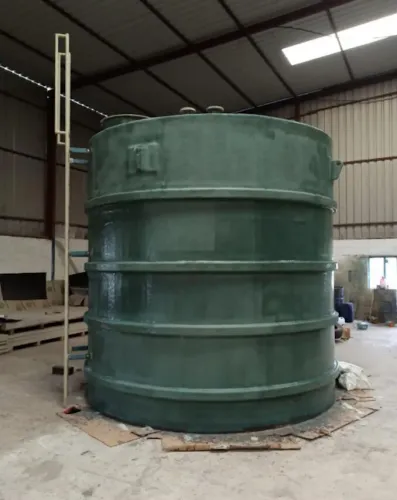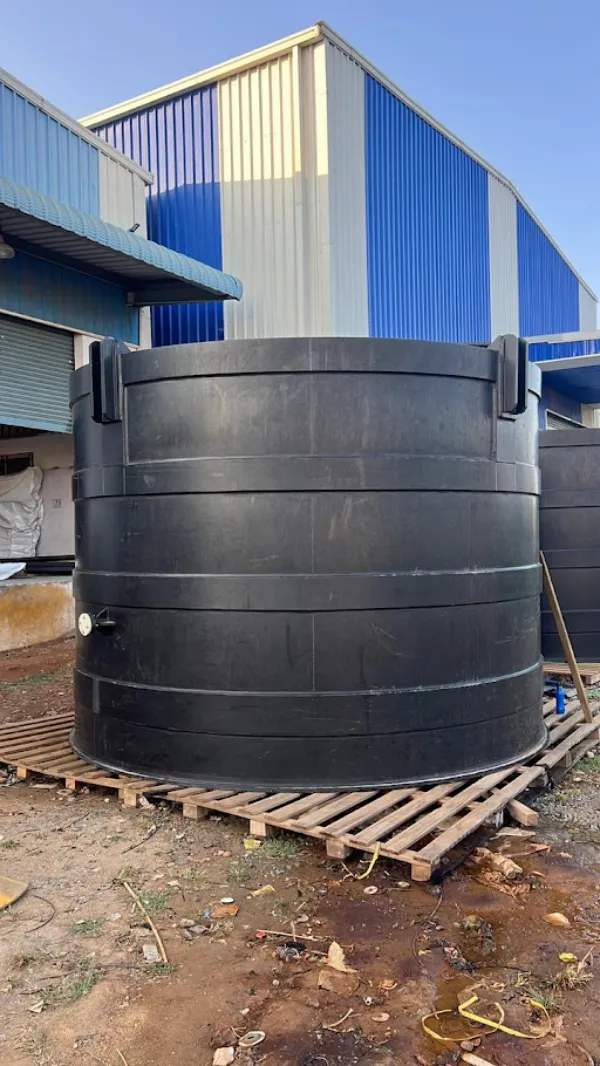
An HDPE Storage Tank can be used across various industrial liquid-handling applications, but buying one based solely on litres and price can lead to an unsuitable installation. Chemical compatibility, temperature, tank geometry, fittings, structural requirements, and site conditions should all be reviewed before procurement.
This is particularly relevant for factories upgrading chemical storage infrastructure or integrating new tanks into an existing process facility.
Define the Application Clearly
Start by documenting what the tank is expected to do.
Is it intended for chemical storage, process water, wastewater, intermediate liquid holding, or another manufacturing function?
The intended application determines many subsequent design decisions.
The liquid's chemical composition, concentration, specific gravity, and temperature should be communicated to the tank manufacturer.
Check Material Compatibility
HDPE provides useful resistance to many substances, but that does not mean it is universally compatible with every industrial chemical under all conditions.
Compatibility should be evaluated using the actual chemical concentration and expected temperature.
If several chemicals may enter the same tank at different times, each expected service condition should be considered.
Determine the Right Capacity
Nominal storage requirement is only the starting point.
Manufacturers should consider operating level, free space, filling method, consumption pattern, transfer frequency, and future capacity requirements.
Oversizing without a reason consumes valuable floor space. Undersizing may lead to frequent transfers and operational inconvenience.
Plan the Tank Around the Site
Before fabrication, confirm the physical installation area.
Measure:
- Available footprint
- Maximum allowable height
- Doorway dimensions
- Access route
- Equipment clearance
- Foundation area
- Nearby piping
- Pump location
A tank that fits the operating location may still be difficult to move into the facility if the installation route is not checked.
Finalise Connections Early
The number and position of tank connections can have a major effect on installation.
Inlets, outlets, drains, vents, overflows, level connections, and pump suction lines should be mapped against site piping.
Instrumentation requirements should also be identified during specification.
Consider Inspection Requirements
Routine inspection should remain possible after installation.
The arrangement should allow technicians to access fittings, valves, pipelines, and other components without dismantling unrelated equipment.
If cleaning is expected, suitable access provisions should be included in the design.
Assess the Complete Supplier Scope
When an HDPE tank forms part of a chemical treatment facility, using a manufacturer that understands related process equipment can simplify integration.
For industrial businesses in Bengaluru and other manufacturing centres across Karnataka, Associated Surface Innovators works with customised tanks, electroplating systems, fume-control equipment, and surface treatment plants.
When discussing an HDPE Storage Tank, procurement managers should provide complete process and site data rather than requesting a generic quotation based only on capacity.
A technically useful proposal should reflect the liquid being stored, operating conditions, required connections, available space, and integration with the surrounding process. This approach allows the tank to be evaluated as functional industrial equipment rather than simply as storage volume.
Keywords