A wet scrubber only controls the chemical vapours and mists that a hood captures, transports and presents to the treatment liquor. By the end, you will be able to connect tank chemistry, capture airflow, scrubber type, operating controls and wastewater handling into a defensible system specification.
Key takeaways
- Capture vapours at the tank before sending exhaust to the scrubber.
- Use tank covers to reduce exposed surface area and required airflow.
- Match scrubber design to the plating chemistry and contaminant.
- Specify controls for exposure, discharge compliance and lifecycle cost.
From Tank Hood to Treated Discharge: How a Scrubber Works
A wet scrubber removes contamination only after local exhaust ventilation captures it at the electroplating tank. The source enclosure, side-draft hood or push-pull hood must provide the specified capture velocity at the emission point; tank covers reduce the exposed surface and the airflow required.
- The hood draws acid mist, alkaline vapour or other emissions away from the operator and into ductwork. Cross-drafts from open doors, nearby fans or vehicle movement can defeat capture.
- Ductwork carries the contaminated air through balanced branches. A fan maintains the airflow and overcomes hood, duct, scrubber and stack pressure losses.
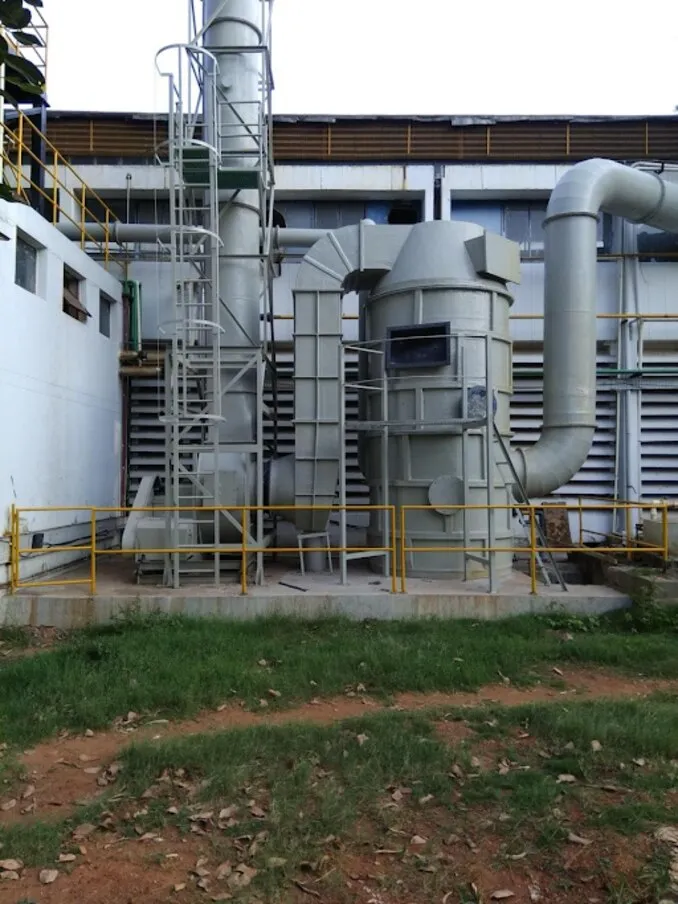
- Inside the fume scrubber, the gas contacts recirculated liquid through packing, trays or spray nozzles. Soluble contaminants transfer into the liquid, where the selected reagent controls the chemistry.
- A mist eliminator removes entrained liquid droplets before the treated gas reaches the outlet duct and stack. Excessive gas velocity, fouling or poor drainage causes droplet carryover, downstream corrosion and a visible plume.
- The stack discharges the treated gas at the designed height and velocity, while blowdown removes accumulated salts, metals and reaction products from the recirculating liquor.
The hood, duct, fan, scrubber and stack form one chemical vapour control system. Insufficient make-up air can reduce hood flow, while excessive building exhaust can create negative pressure and pull emissions away from the hood.
A scrubber cannot recover fumes already released into the building because of poor source capture; acceptable stack performance does not prove safe worker exposure.
Match the Scrubber Type to the Plating Chemistry
Select by contaminant form and loading, not by tank label. A packed-bed scrubber is the usual starting point for soluble acid gases; its wetted packing provides sustained contact, while a spray-tower scrubber trades contact efficiency for simpler maintenance.
| Option | Gas-liquid contact | Pressure drop | Mist handling | Maintenance burden |
|---|---|---|---|---|
| Packed-bed scrubber | High, with absorptive packing | Moderate | Good for acid mist; needs a mist eliminator | Scaling and blocked packing require inspection |
| Tray scrubber | High stagewise contact | Moderate to high | Fair; flooding limits capacity | Accessible trays, but more moving liquid parts |
| Spray-tower scrubber | Low to moderate | Low | Fair for coarse droplets, weak for fine mist | Simple, with nozzle blockage risk |
| Venturi scrubber | Intense droplet contact | High | Excellent for fine aerosol and metal-bearing mist | High fan energy, erosion and abrasive slurry wear |
For alkaline liquor, pH controls immediate neutralisation, not total reagent capacity. Match alkali inventory to acid loading and stoichiometry, then check chemical strength and blowdown; excess reagent increases dissolved salts, scaling, wastewater and cost.
- Hydrochloric-acid pickling and sulfuric-acid operations produce soluble acid gases suited to packed beds or trays with alkaline neutralisation.
- Nitric acid needs compatible materials and controlled chemistry; oxidising liquor can change reagent demand.
- Chromic-acid plating produces mist containing hexavalent chromium, not a true vapour; specify fine-mist performance and consider mesh pads or packed beds.
- Cyanide-containing solutions need dedicated segregation; acid contact can form lethal hydrogen cyanide.
- Alkaline cleaners and ammonia-bearing processes need chemistry-specific absorption liquor, not water by default.
- Water scrubbing is weak for low-solubility solvent vapours; use activated carbon or thermal oxidation, while scrubbing accompanying acid gas or mist.
Turn Tank Dimensions and Process Conditions into Airflow
A 12,000 CFM acid fume exhaust system fits a plating line only if its hoods, branches and pressure losses support that flow at the source. The number alone proves nothing.
1. Measure each tank’s length and width, exposed solution surface, hood opening, enclosure volume and distance to the duct. Record process temperature, agitation intensity, conveyor or production speed, and the number of connected tanks operating together.
2. Set the required capture velocity at each opening. Open tanks, vigorous agitation, hot solutions and fast-moving work release more fume; covers, partial enclosures and push-pull hoods contain the plume and reduce required hood airflow.
3. Add simultaneous branch flows, then perform duct sizing for the required transport velocity. Include branch count, duct length, elbows, transitions, scrubber pressure drop, hood static pressure and balancing dampers. A long duct run or undersized branch can leave one tank starved while another takes excess air.
4. Select the fan for total system resistance at the actual combined flow, not its free-air rating. Confirm the result with a capture test using smoke or another suitable tracer at operating conditions.
Crosswinds, open doors and negative building pressure pull fumes away from a hood. Insufficient make-up air reduces fan flow and can collapse enclosure performance. Request hood dimensions, branch flows, pressure-drop data and test results before accepting 12,000 CFM as evidence of adequate capture.
Control the Variables That Decide Scrubber Performance
Treat a scrubber as out of control when any operating value leaves its documented design range, even if the fan is running. Require design values and alarm points for liquid-to-gas ratio, recirculation flow, pressure drop, gas velocity, pH control or reagent concentration, oxidation-reduction potential where oxidation chemistry applies, liquid temperature and blowdown rate.
| Measurement | What it reveals | Failure sign |
|---|---|---|
| Liquid flow and liquid-to-gas ratio | Whether spray coverage and contact match design | Low flow indicates pump failure or blocked nozzles |
| Pressure drop | Gas resistance through packing and mist eliminator | A rise suggests scaling or blockage; a fall can indicate damaged packing or bypass |
| pH, reagent strength and oxidation-reduction potential | Whether neutralisation or oxidation chemistry has capacity | Weak reagent or exhausted chemistry leaves emissions untreated |
| Gas velocity and liquid temperature | Whether contact and mist separation remain within design | Excess velocity drives droplets into the outlet |
| Blowdown rate and liquor condition | Whether contaminants leave the recirculation loop | Low blowdown concentrates acid salts, dissolved metals and other contaminants |
Blocked spray nozzles, scaled or damaged packing, and a failed pump can leave the fan apparently healthy while gas treatment collapses. A saturated mist eliminator or poor drainage causes droplet carryover, visible plume, downstream corrosion and contaminated drainage.
Control blowdown continuously against liquor analysis and send it to wastewater treatment or approved disposal. The scrubber creates that waste stream; it is not an afterthought. Document inspections, nozzle condition, packing condition and mist-eliminator cleaning alongside the instrument readings.
Build a Specification That Covers Exposure, Compliance and Lifecycle Cost
Do not approve a scrubber from its advertised removal percentage. Request a hood-to-stack specification that states:
- Each contaminant: hydrochloric acid, sulfuric acid, nitric acid, chromic-acid mist, cyanide, alkaline vapour, ammonia or solvent.
- Inlet concentration, mass loading, gas temperature and peak batch condition.
- Outlet limits, test method and averaging period.
- Separate mist and gas performance, including the mist eliminator rating.
- Fan airflow, static pressure, motor margin and corrosion-resistant construction.
- Stack height, diameter, discharge velocity and sampling ports.
- Recirculation flow, liquid-to-gas ratio and design gas velocity.
- Normal and alarm differential-pressure range.
- Reagent type, concentration, dosing method and pH or oxidation-reduction-potential control.
- Make-up water, blowdown volume, dissolved-metal loading and wastewater destination.
- Inspection doors, drain points, nozzle access and packing or mist-eliminator replacement method.
- Commissioning tests, periodic performance testing and acceptance criteria.
For chromium plating, review decorative and hard chromium requirements separately under the U.S. chromium NESHAP where that rule applies. A generic acid-gas removal percentage does not prove compliance, especially when the pollutant is chromic-acid mist containing hexavalent chromium.
Check the evidence type before accepting a result.
| Check | Stack testing | Worker exposure verification |
|---|---|---|
| Purpose | Measures outlet emissions | Measures breathing-zone exposure |
| Evidence | Approved stack method and outlet limit | Personal sampling over an 8-hour shift |
| U.S. hexavalent chromium benchmark | Not a worker limit | 5 micrograms per cubic metre TWA; 2.5 microgram action level |
Associated Surface Innovators, like any bidder, should provide the complete design, operating envelope, maintenance schedule and wastewater assumptions—not only a blower or scrubber rating. Include scrubber lifecycle cost for reagent, power, inspections, parts and disposal.
Related products
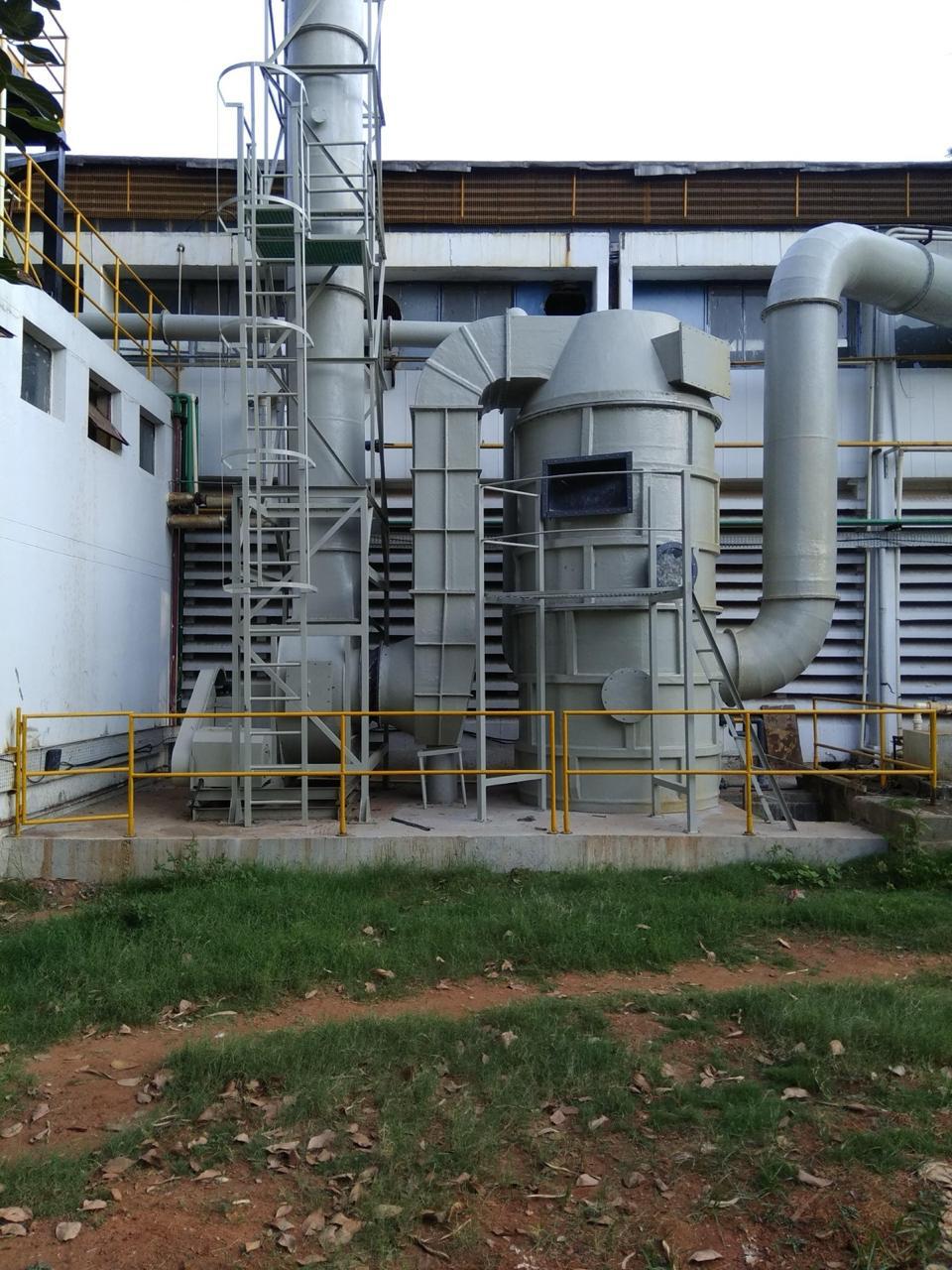 | Fume Scrubbers We design and manufacture metal-free industrial fume scrubbing systems engineered to effectively remove harmful and corrosive fumes generated during... View product → |
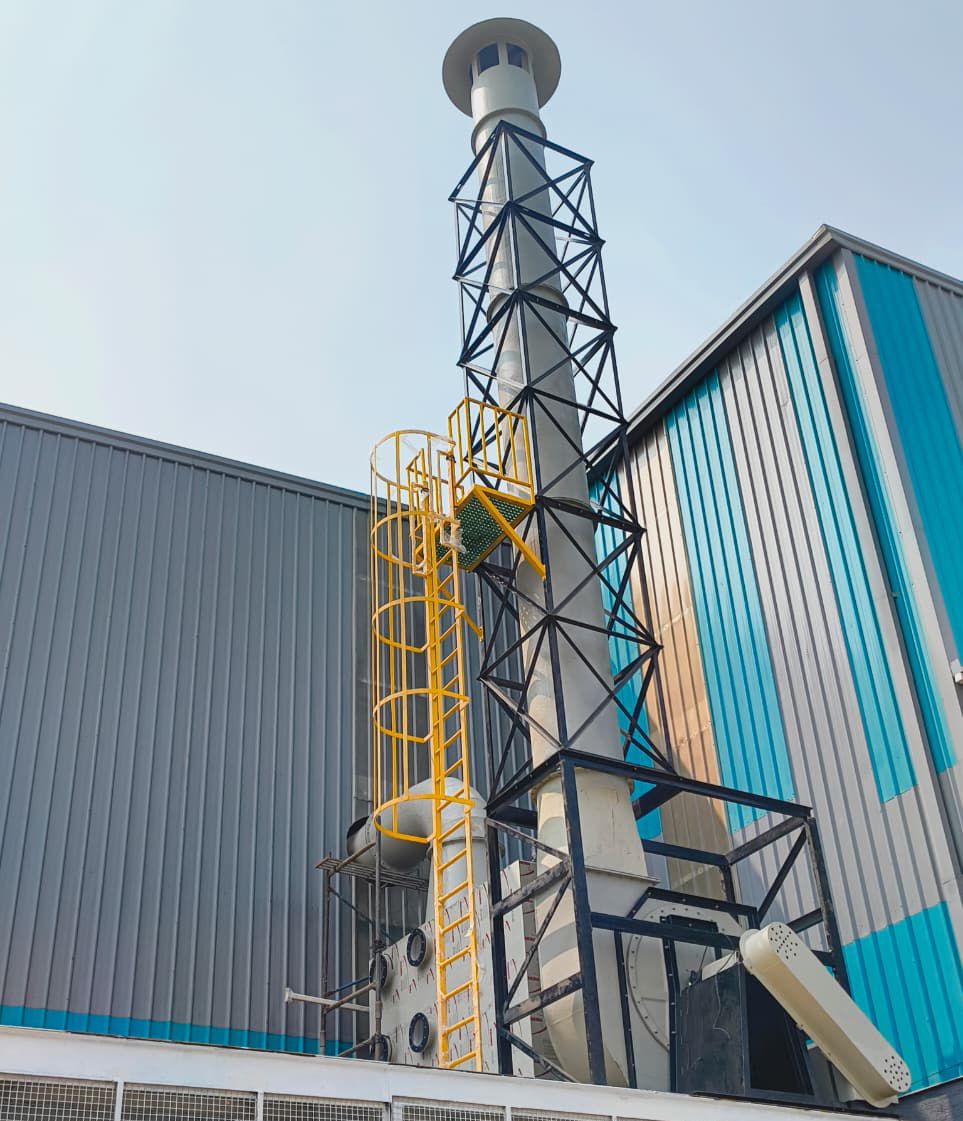 | Fume Exhaust System 12000CFM Acid Fume Exhaust System Our Fume Exhaust System is a high-performance ventilation solution designed to effectively capture, extract, and neutralize harmful fumes, gases, and... View product → |
Frequently asked questions
How does a wet scrubber treat electroplating vapours?
A hood first captures vapours at the tank, then ductwork carries the contaminated air to the scrubber for treatment before discharge.
How do you choose a scrubber for plating chemistry?
Match the scrubber type and construction materials to the chemistry, contaminant and required treatment performance.
What determines airflow for an electroplating tank?
Tank dimensions, hood design, exposed surface area and process conditions determine the airflow needed for capture.
Which variables affect scrubber performance?
Capture velocity, airflow, liquid circulation, pressure drop and operating controls determine whether the system performs consistently.
Related products
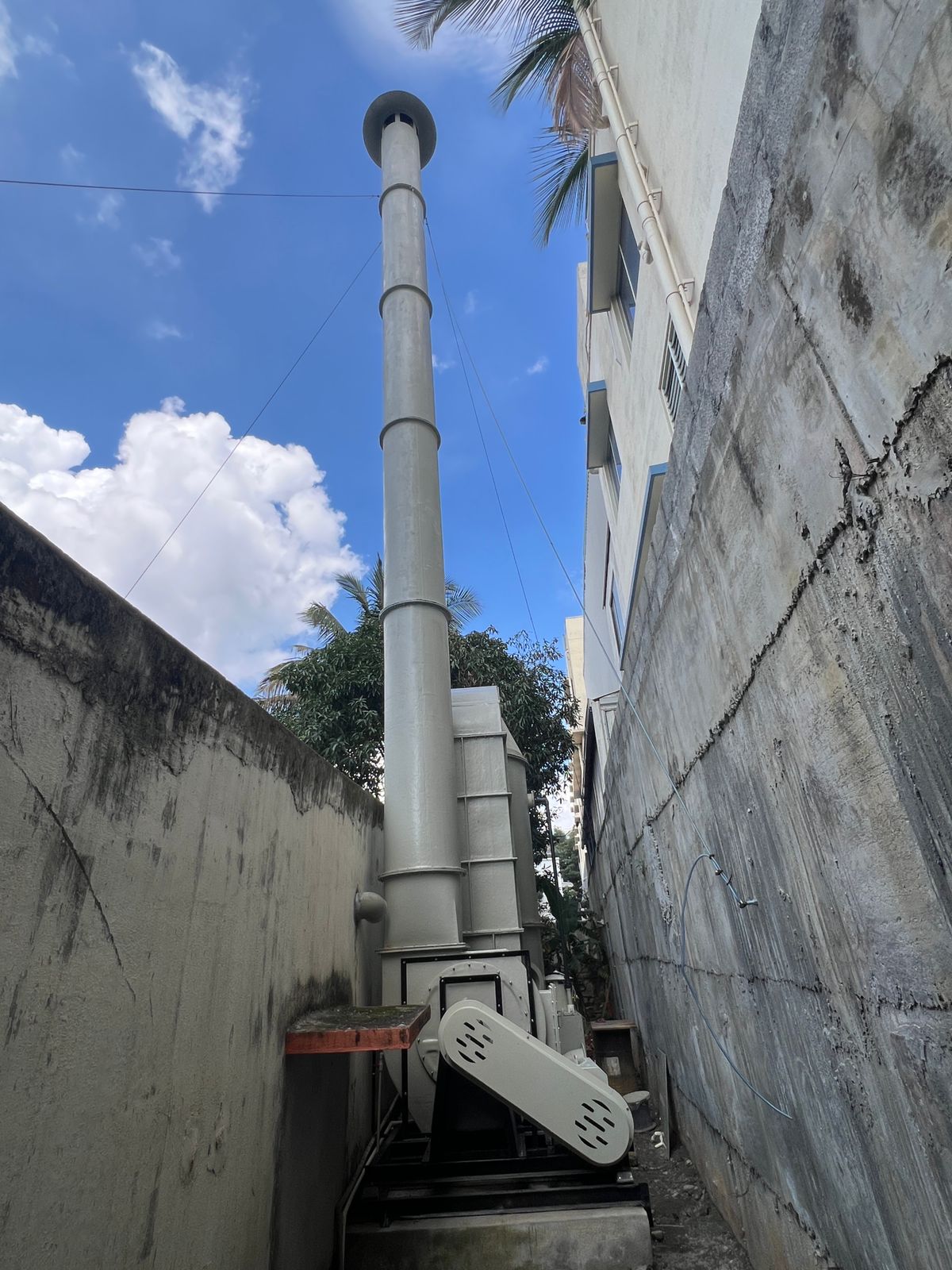 | Fume Exhaust System ₹1000000 Our Fume Exhaust Blower is a robust and highly efficient industrial blower designed for the effective extraction of corrosive fumes, toxic gases,... View product → |
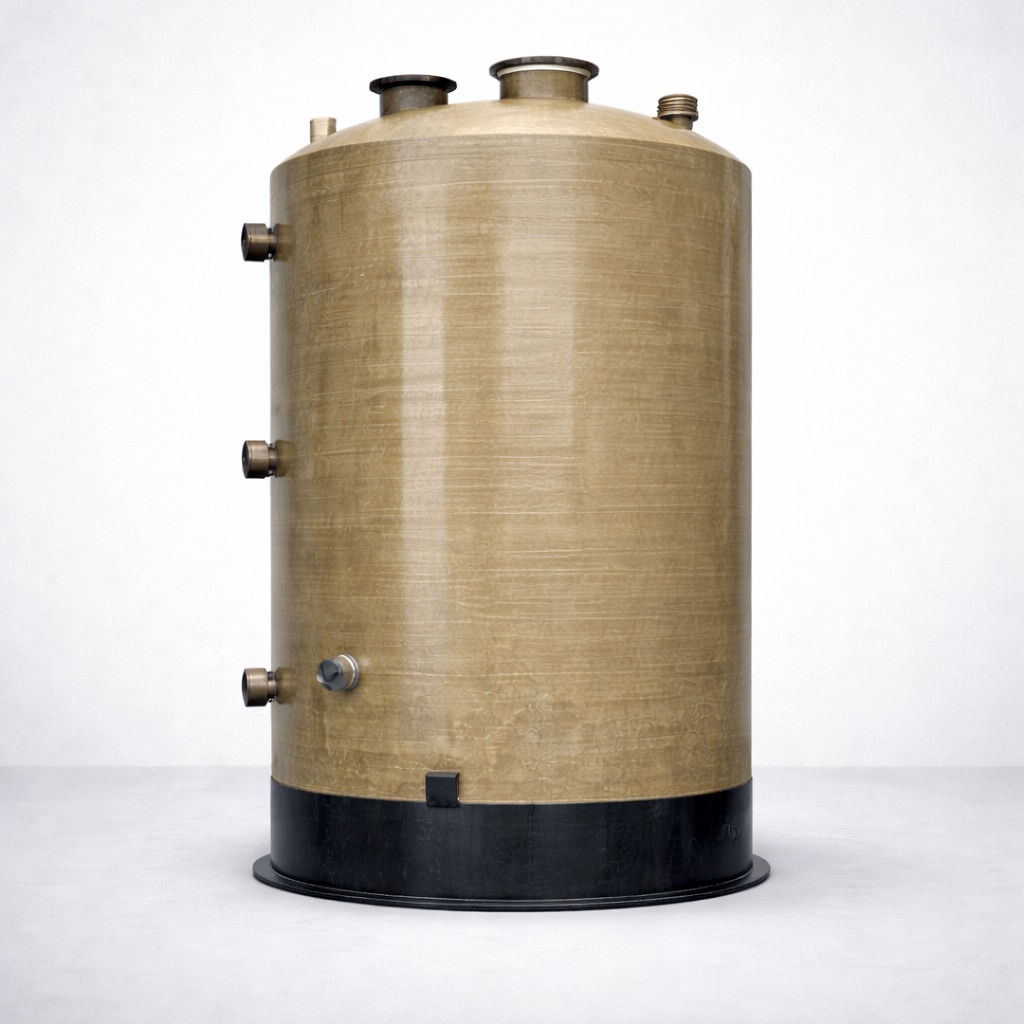 | PVC Tank We are a leading PVDF + FRP Tank manufacturer, specializing in the design and fabrication of high-performance storage tanks for demanding industrial... View product → |