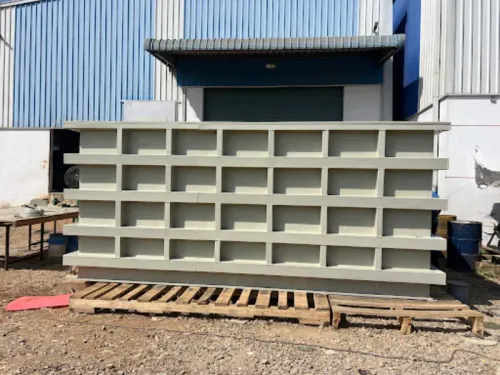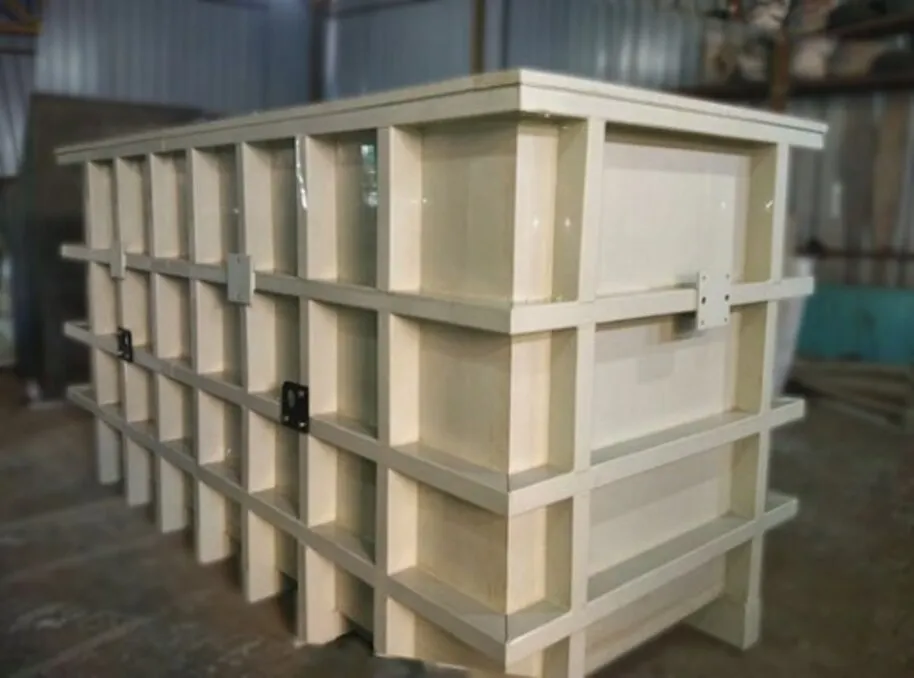
Choosing a tank material requires more than matching a chemical to a familiar plastic. You need to connect the exact chemical, concentration, temperature, tank geometry, loading conditions and fabrication method before deciding whether PP offers the right balance of corrosion resistance, weight, cost and service life.
Key takeaways
- Confirm PP compatibility with every chemical at its operating temperature.
- Size the tank for working volume, freeboard, access and future expansion.
- Specify ribs, supports and wall thickness to control bowing and collapse.
- Inspect welds, nozzles, anchors, bunding and leak protection before commissioning.
What makes polypropylene suitable for chemical tanks?
Polypropylene is widely selected for acids, alkalis, salts, plating solutions and many aqueous chemicals because it presents no metal surface for galvanic or metal corrosion. Its low moisture absorption helps maintain dimensional stability, and its lower density than metals makes a polypropylene chemical tank easier to handle and fabricate.
That makes PP a practical choice for an acid storage tank or alkali storage tank.
PP chemical resistance is not universal. It depends on the chemical identity, concentration, temperature and exposure time. Before approving the material, check:
- The exact chemical name, concentration, operating temperature and specific gravity against the selected resin’s compatibility chart.
- Strong oxidizers, concentrated nitric or chromic acid, aromatic hydrocarbons, chlorinated solvents and aggressive mixtures for attack, embrittlement or softening.
- Permeation and vapor release, because a tank wall can look intact while solvents or low-molecular-weight chemicals diffuse through it or accumulate in an enclosed area.
- Outdoor exposure, since unstabilized PP can become brittle under ultraviolet light; specify UV-stabilized resin, shielding or an enclosure.
- Fire exposure, because PP is a combustible thermoplastic that softens below its melting range and is not inherently fire-safe.
Temperature also controls service life. Hot liquid, cycling and local heating reduce allowable wall stress, so a grade suitable at 20–25°C cannot be assumed suitable at 80–100°C. Request the grade’s design temperature range and assess ventilation, vapor control, secondary containment and fire separation for hazardous service.
How does PP compare with other tank materials?
PP is usually the better choice for acids, alkalis, salts and aqueous plating solutions when you need a corrosion-resistant, relatively light tank. It is stiffer and handles warmer service than HDPE, while HDPE offers better impact toughness and often suits cooler, less demanding storage.
| Material | Where it beats or loses to PP | Main decision point |
|---|---|---|
| HDPE | Tougher against impact, but less stiff and usually limited to lower temperatures | Choose HDPE for impact resistance; choose PP for stiffness and warmer chemical service |
| PVC | Rigid and easily solvent-cemented, but has lower temperature capability | PP suits hotter service and heat-welded fabrication |
| CPVC | Handles higher temperatures than PVC, but remains less tolerant of some fabrication stresses | Compare the actual temperature and chemical concentration |
| PVDF | Better for aggressive chemicals and higher-purity duty, but costs substantially more | Use PVDF when PP compatibility or contamination control is inadequate |
| FRP | Provides greater structural strength, but permeation and liner failure can expose the resin or reinforcement | Confirm the resin, liner, laminate and consequences of liner damage |
| Stainless steel | Tolerates higher heat and structural loads, but chemicals can attack the metal and contaminate the process | Select it only after checking corrosion, pitting and metal-ion risks |
A PPH tank uses homopolymer polypropylene. PPH is not automatically interchangeable with every standard PP formulation because impact strength, weld behaviour, stress resistance and temperature performance vary by grade. Use the exact resin grade’s compatibility chart at the specified concentration and temperature; never treat all polypropylene as equivalent.
How should you select tank capacity, shape and operating limits?
Choose PP tank capacity from the working volume, not the shell’s total volume. Working volume is the liquid required for a batch or process; total volume must also provide freeboard, overflow space, thermal expansion and batch surges. Confirm that the selected PP tank capacity matches filling, draining and agitation requirements.
| Option | Main advantage | Choose it when |
|---|---|---|
| Vertical cylindrical tank | Small footprint, high liquid head and good drainage | Floor space is limited and liquid head or bottom drainage matters |
| Horizontal chemical tank | Low liquid head and easy access | The site has length available but limited height, or gravity storage is preferred |
| Rectangular PP tank | Efficient use of corners and broad access | The tank must fit a fixed bay, support baskets or provide wide process access |
| Open-top tank | Simple loading, inspection and manual handling | The process requires frequent access and does not release hazardous vapour |
Specify the chemical name, concentration, specific gravity, batch volume, filling and draining rates, indoor or outdoor location, support conditions, access openings, nozzle sizes, venting and agitator loads. Include the selected PP grade and its design temperature range; hot liquid, temperature cycling and local heating reduce allowable wall stress and can deform a tank.
PP expands roughly 0.1 to 0.2 mm/m·°C. A rigid anchor or pipe connection can therefore restrain normal movement and load the shell. Use flexible connections and movement allowances, and check vacuum protection because rapid draining or blocked venting can collapse an atmospheric tank.
Which construction details prevent leaks, bowing and collapse?
A fabricated PP tank needs more than chemically compatible sheet: unsupported flat panels bow under liquid head, then creep under sustained load, especially at elevated temperature. Top-mounted agitators, motors and platforms add local loads that can distort the roof and transfer stress into nozzles.
PP tank welding relies on hot-gas, hot-wedge or extrusion welding with compatible filler, clean prepared surfaces, controlled heat and travel speed, and trained operators. Oxidation, contamination, poor fusion or excess heat can create hidden leak paths.
Specify these details in the fabrication drawing:
- Reinforced nozzles and manways, with baffles where mixing or wave control requires them.
- Tank stiffening rings, formed panels or external frames sized for liquid head and equipment loads.
- Supports that distribute weight without rigidly blocking thermal movement.
- Sloped drains and overflow lines sized for the filling rate.
Chemical tank venting must protect an atmospheric or low-pressure vessel from both pressure and vacuum. A blocked vent, pump suction, rapid draining, steam condensation or thermal contraction can collapse the tank; an undersized overflow can cause spills.
| Test | Finds | Does not prove |
|---|---|---|
| Vacuum-box or dye test | Surface leaks at welds | Long-term structural strength |
| Spark test | Pinholes in suitable linings | Resistance to creep or buckling |
| Hydrostatic test | Leakage under liquid fill | Seismic, nozzle or top-equipment loads |
| Structural verification | Deflection, supports and dimensions | Weld tightness alone |
For PP tank leak testing, request the weld procedure, inspection records, dimensional checks and signed test results. A leak-free tank can still fail if its stiffening or support design is inadequate.
What should you verify before approving a PP tank installation?
Approve the installation only after the PP tank inspection checklist matches the process, site and safety conditions—not just the quoted tank size.
1. Match the manufacturer’s compatibility chart to the exact chemical name, concentration, operating temperature, specific gravity and exposure time. Confirm the selected grade’s design temperature range; do not extend a 20–25 °C rating to an 80–100 °C bath.
2. Confirm working capacity, total capacity, freeboard, overflow space, filling and draining rates, and thermal expansion allowance. Check the drawing for sheet thickness, weld procedure, filler material, nozzle reinforcement, manways, baffles and stiffening members.
3. Review vent and overflow sizing, nozzle loads and agitator loads. Blocked vents, pump suction or rapid cooling can collapse an atmospheric tank.
4. Approve the support arrangement and PP tank anchorage for empty-tank flotation, wind movement, seismic sliding and impact. Anchors must prevent overturning without rigidly restraining thermal movement.
5. Verify compatible secondary containment, outdoor UV protection, impact guards and drainage. Provide ventilation for hazardous vapors, plus fire separation and a suitable fire-protection strategy where solvents or heated oxidizers are present; PP is combustible.
6. Request drawings, a material and weld specification, dimensional and inspection records, and a documented test plan. A weld leak test cannot prove resistance to creep or buckling.
For a custom PP chemical tank, Associated Surface Innovators is most useful when it converts these inputs into that engineering record rather than offering only nominal capacity.
Related products
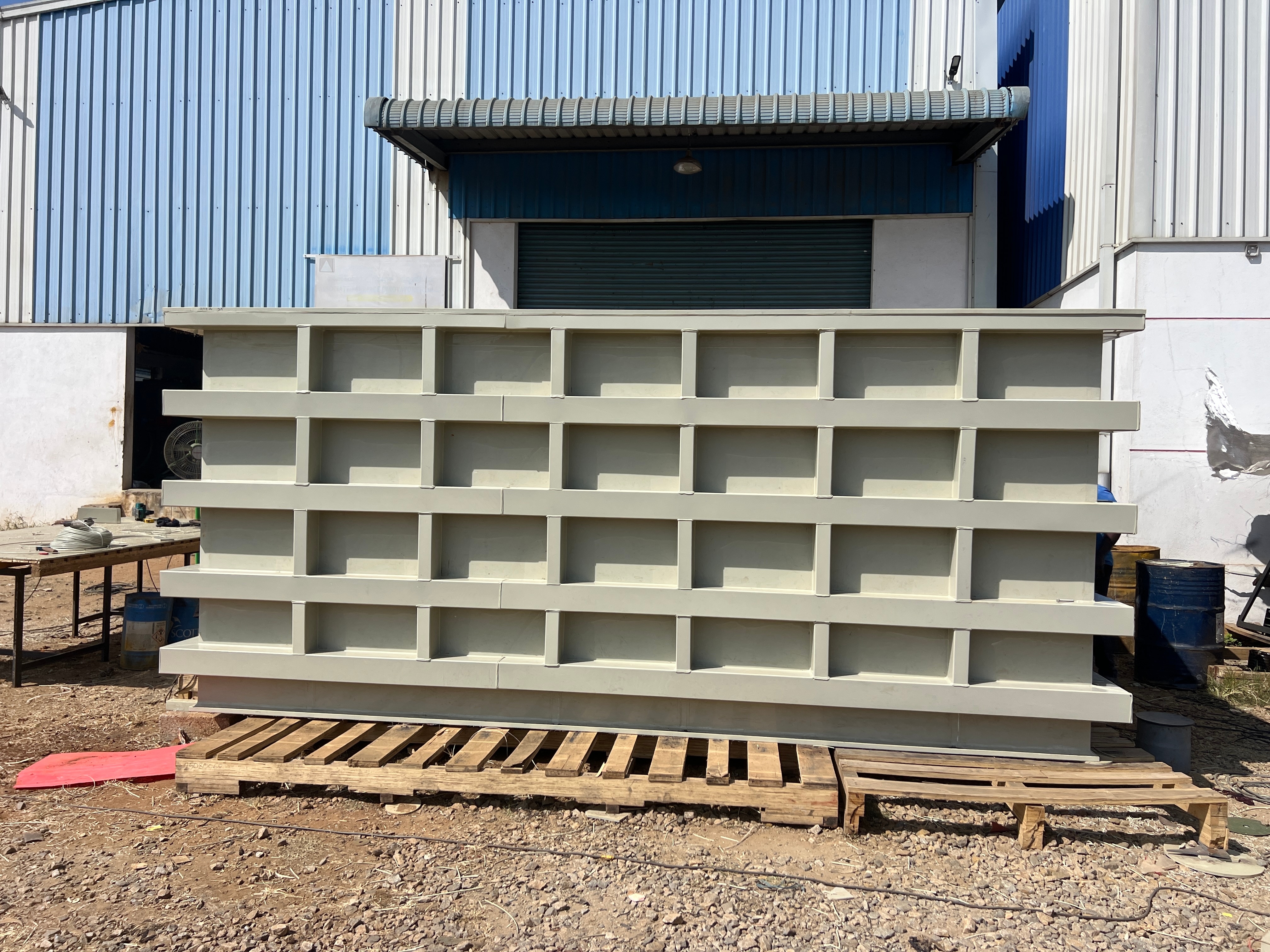 | pph tank ₹100000 We manufacture and supply a wide range of PP Storage Tanks made from high-quality Polypropylene (PP) to ensure durability and reliable performance in... View product → |
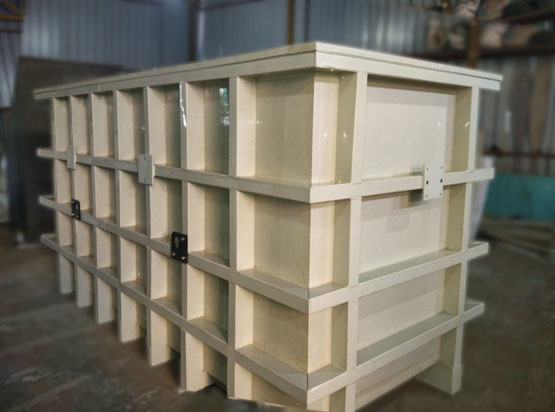 | Storage Tank We manufacture and supply a wide range of PP Storage Tanks made from high-quality Polypropylene (PP) to ensure durability and reliable performance in... View product → |
Frequently asked questions
What makes polypropylene suitable for chemical tanks?
Polypropylene resists many acids, alkalis, salts, plating solutions and aqueous chemicals without exposing contents to a metal tank surface. Confirm compatibility for the exact chemical concentration, temperature and exposure time before selection.
How does PP compare with other tank materials?
PP avoids metal corrosion and is lighter and easier to fabricate than many metal tanks, but it has lower stiffness and temperature resistance. Compare it with HDPE, PVC, FRP, stainless steel and lined steel against chemical compatibility, temperature, structural loads, maintenance and cost.
How should you select PP tank capacity, shape and operating limits?
Define working volume separately from total volume, then allow freeboard for thermal expansion, foaming, agitation and safe filling. Set limits for temperature, specific gravity, vacuum, pressure, outdoor exposure and support conditions.
Which construction details prevent leaks, bowing and collapse?
Specify suitable wall thickness, welded seams, formed corners, stiffening ribs, support spacing, reinforced nozzles and a level foundation. Add external framing or a secondary containment system when the tank load, geometry or installation requires it.
What should you verify before approving a PP tank installation?
Check material grade, drawings, dimensions, weld quality, nozzle alignment, supports, anchors, level, bunding, drain arrangements and access. Test the tank under a controlled fill procedure before introducing process chemicals.
Related product
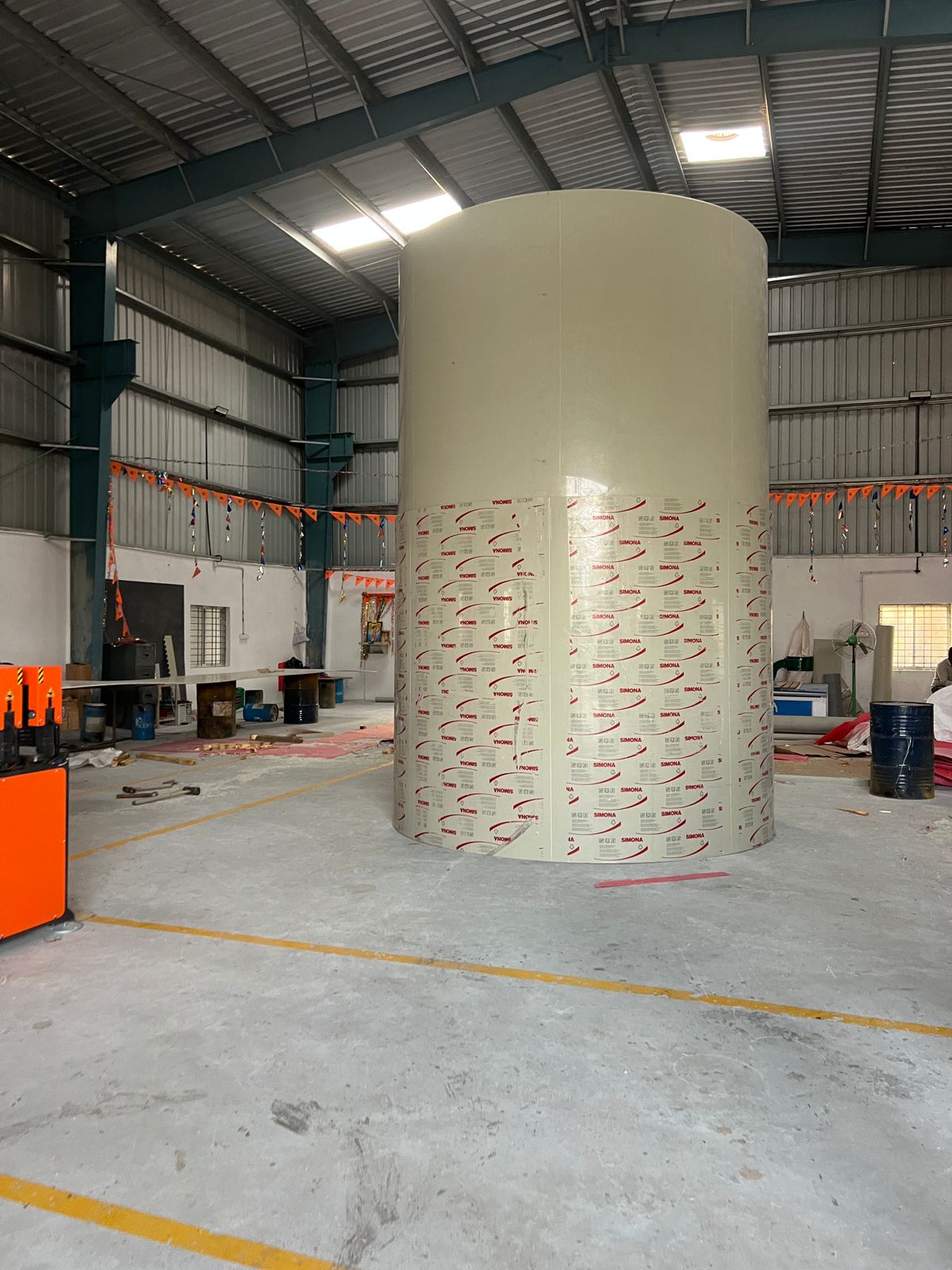 | PPH Tank We are a leading manufacturer of high-quality Cylindrical PP Tanks, designed to deliver reliable and efficient storage solutions for a wide range of... View product → |