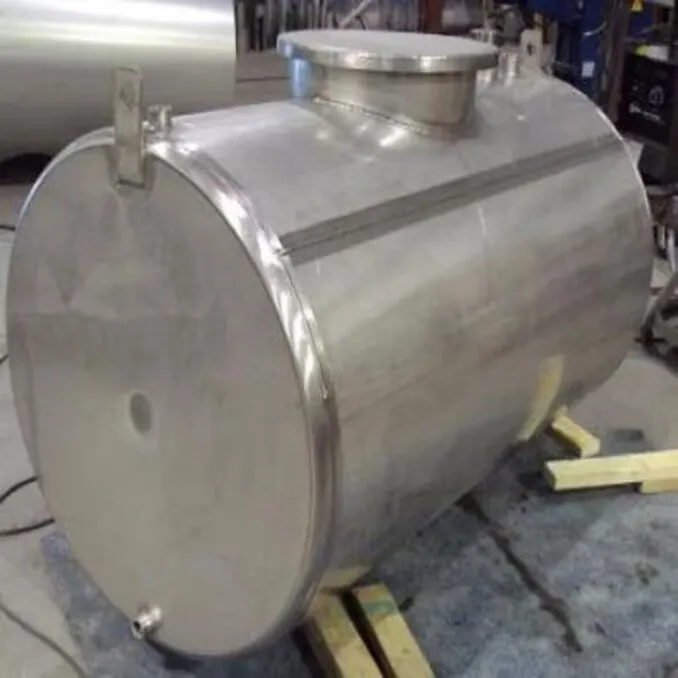
Stainless steel is the right tank material only when its alloy, geometry and fabrication quality match the liquid and the way you operate it. By the end, you will be able to compare SS 304, SS 316 and SS 316L with PP, PPH, PVC, PVDF plus FRP, FRP and HDPE, then turn that decision into a specification a fabricator can verify.
Key takeaways
- Match SS 304, 316 or 316L to chemicals, temperature and chloride exposure.
- Design for agitation, thermal cycling, pressure, drainage and heat-transfer loads.
- Require weld, surface-finish, passivation and material-traceability records.
- Check galvanic contact, electrical bonding and pressure-vessel code requirements before ordering.
Start with the chemical service, not the word stainless
A 20% sodium hydroxide cleaning bath at 70°C, continuously agitated and drained between batches, can favour an SS tank when you need a rigid shell, repeated thermal cycling, mixer loads and dependable heat transfer. Hot, concentrated caustic can still cause stress-corrosion cracking, so verify the grade and service data before approval.
Set your PP, PPH and PVC tanks comparison criteria against the same operating case.
| Option | Better fit | Main limitation |
|---|---|---|
| SS tank | Heated, agitated service needing rigidity, close-tolerance nozzles and efficient heat transfer | Caustic cracking, chloride pitting and galvanic attack remain possible |
| PP, PPH or PVC tank | Moderate-temperature chemical storage where low weight and corrosion resistance matter | Creep, softening, permeation and limited load capacity can affect mixers and fittings |
| FRP or lined tank | Aggressive acid service where the resin or lining matches the chemical | Permeation, delamination and pinholes require inspection and monitoring |
Before approving SS tank selection, check:
- Record concentration, temperature, exposure time, agitation and contaminants; chlorides and oxidizers can turn a suitable grade into pitting or crevice attack.
- Isolate carbon-steel supports, mild-steel bolts, copper buswork and dissimilar pipework from wetted stainless surfaces.
- Require heat-tint removal and passivation to ASTM A380/A380M and ASTM A967/A967M after welding.
- Reject stainless for hydrofluoric acid, hydrochloric acid, wet chlorine or some hypochlorite services; inspect any lining for holidays and pinholes.
- In electroplating, coordinate the conductive shell with grounding, insulation and busbar layout to prevent stray deposition or local dissolution.
Match SS 304, SS 316 or SS 316L to the actual exposure
Choose SS 304 for clean, moderate-temperature service; choose SS 316 when chlorides, salt contamination or wet crevices raise pitting risk; choose SS 316L when welded zones need improved resistance to post-weld sensitization. Molybdenum gives 316 and 316L better chloride-pitting resistance than SS 304, but it does not make them universally chemical-resistant.
| Grade | Best fit | Important limit |
|---|---|---|
| SS 304 | Water-based liquids with low chloride contamination and moderate temperature | Chlorides, stagnant zones and heated surfaces can cause pitting or stress-corrosion cracking sooner than with 316 |
| SS 316 | Chloride-bearing service, salt-contaminated process liquids and tougher crevice exposure | Concentrated hydrochloric acid, ferric chloride and sodium hypochlorite can attack it rapidly |
| SS 316L | Fabricated tanks with extensive welding or repeated weld repairs | Low carbon reduces sensitization in heat-affected zones; it does not prevent pitting or acid attack |
- Record chemical concentration at its maximum, not its normal reading. Evaporation, dosing errors and rinse-water carryover can concentrate the liquid at the tank wall.
- Specify operating and cleaning temperatures, aeration, agitation and exposure time. A warm, oxygenated chloride solution held in a stagnant corner creates more risk than a brief, cool transfer.
- Identify contaminants such as chlorides, ferric ions and oxidizers. Do not approve a “316-safe below X ppm chloride” rule without a defined temperature, pH, surface condition and test scenario.
- Inspect weld zones separately. Residual stress, heat tint, poor drainage and crevices can defeat a suitable nominal grade; require appropriate cleaning and passivation after welding.
Specify the tank around processing loads, not storage volume alone
An atmospheric stainless tank suits processing when it remains vented, carries no sustained internal pressure, and its shell, supports and attachments are designed for the process loads—not merely the liquid volume.
Define these loads before sizing the tank:
- Liquid head at maximum fill, including density changes with temperature
- Agitator torque, shaft loads, impeller diameter and vibration
- Pump suction and discharge forces from recirculation
- Nozzle loads from dosing and filtration systems
- Heating and cooling coil weight, thermal movement and pressure
- Operating and cleaning temperatures, including rapid temperature changes
- Wind, seismic and platform loads
- Vacuum excursions caused by draining, cooling or blocked vents
Mixing tanks need baffles, an agitator support and a bottom outlet that will not leave an unpumpable pocket. A tall, narrow vessel can improve turnover but increases shell and support loads; a wide vessel reduces height while demanding careful agitator selection.
Heating and cooling coils need space for circulation and cleaning. Austenitic stainless expands more than carbon steel and conducts heat less efficiently, so fixed coil supports or copied carbon-steel details can distort the shell, lock in stress or overload nozzles.
Treat recirculation as a hydraulic design problem. Check pump flow, line velocity, suction submergence and pressure drop through filters before choosing nozzle sizes.
If draining or cooling can pull the shell below atmospheric pressure, add a vacuum-breaker design or specify a pressure-vessel construction. API 650 may suit a particular welded tank, while ASME Section VIII or local pressure-vessel rules apply when pressure or vacuum protection is insufficient.
Turn the material decision into a verifiable fabrication specification
Make acceptance conditional on documents, not the phrase “304 stainless.” Require an approved general-arrangement drawing showing shell thicknesses, heads, supports, nozzles, weld map, drainability, internals and design liquid head, temperature, pressure or vacuum. Include calculations for agitator, nozzle and support loads.
| Item | Demand | Acceptance evidence |
|---|---|---|
| Materials | Heat-number traceability for plate, pipe, fittings and filler metal | Material certificates matched to the parts list |
| Weld quality | WPS/PQR, qualified welders, filler-metal specification, inert-gas purge and controlled interpass temperature | Weld map, visual inspection report and specified PT, RT or UT results |
| Surface treatment | Carbon-steel tool segregation; complete heat-tint removal; pickling and passivation | Treatment record stating chemicals, contact time, rinsing and final inspection |
| Standards | Cleaning and passivation to ASTM A380/A380M, with chemical treatment and verification selected under ASTM A967/A967M | Signed procedure and passivation-test results |
| Final tests | Dimensional check, nozzle orientation, leak or hydrostatic test at the approved design basis | Dated test report, calibrated gauge numbers and inspector sign-off |
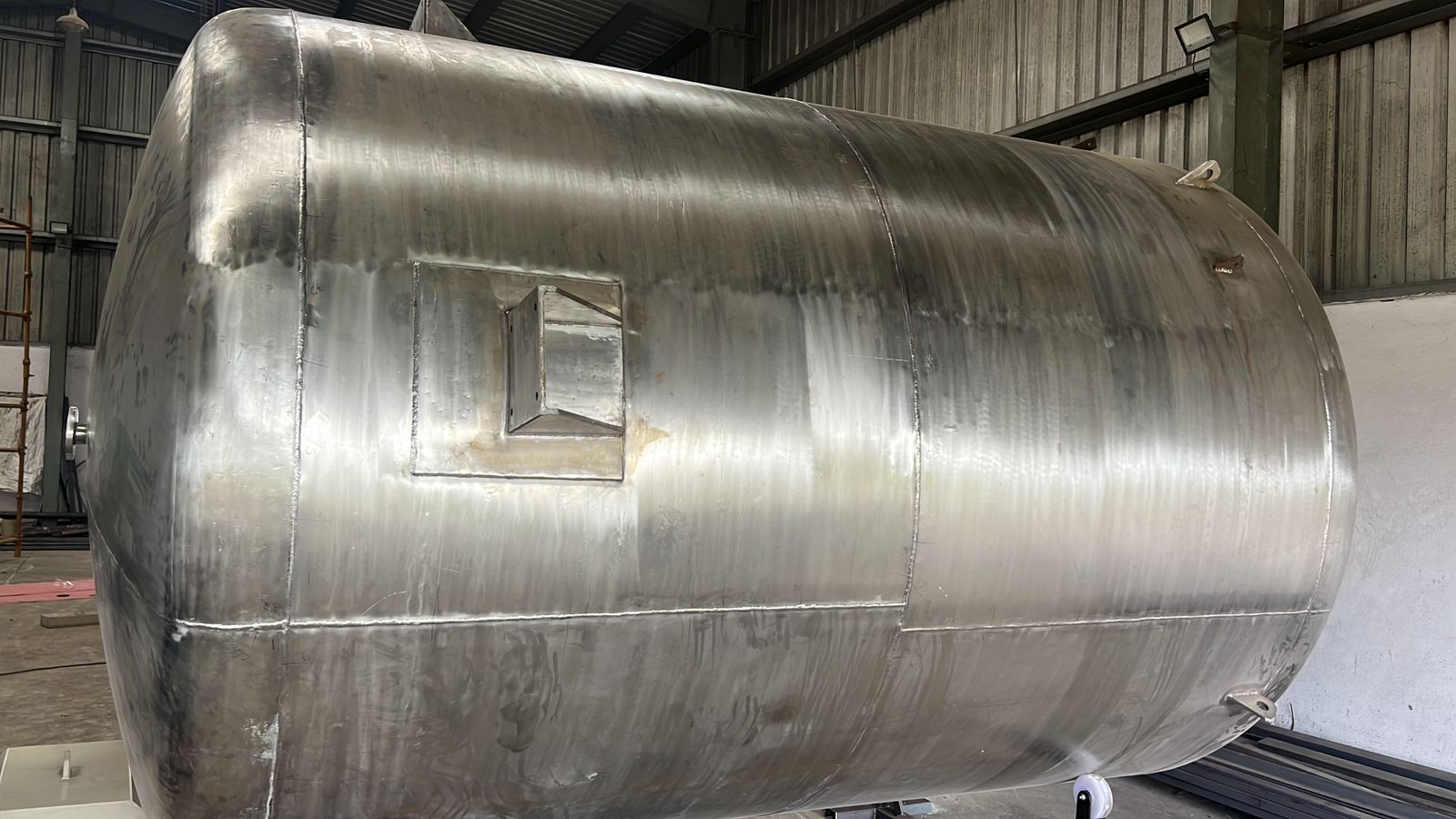
Heat tint is a corrosion site, not a colour defect. Do not accept mechanical polishing alone: it can leave embedded iron, abrasive particles or smeared metal. Give Associated Surface Innovators the same dossier requirement you would give any fabricator; missing records are an acceptance failure, not paperwork to reconstruct later.
Related products
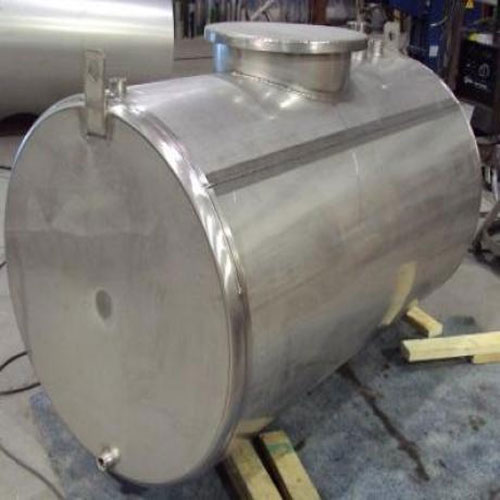 | Storage Tank Our MS / SS Tanks are expertly designed for the safe, reliable, and long-term storage of corrosive acids, chemicals, and aggressive industrial... View product → |
 | Storage Tank Our SS 316L Acid Tanks are specially engineered for the safe, reliable, and long-term storage of highly corrosive acids, chemicals, and aggressive... View product → |
Check electrical, galvanic and code risks before placing the order
A stainless shell can survive the liquid and still fail after installation. Before ordering, close four gaps: electrical current paths, dissimilar-metal contact, pressure conditions and the governing construction code.
1. Map every electrical connection on the drawing. For electroplating tanks, identify the anode and cathode arrangement, busbars, grounding points, insulation, and any path that could make the stainless shell part of the plating circuit. Stray current can cause local dissolution or unwanted deposition near contacts.
2. Identify every wetted or splash-zone metal, including supports, bolts, pipework, thermowells and agitator parts. Replace carbon-steel or copper components where practical, specify compatible wetted fasteners, electrically isolate dissimilar metals, and provide drainage so conductive liquid cannot bridge them. Fabrication abrasives and steel dust also create sites for galvanic corrosion and chloride pitting.
3. Put liquid head, design temperature, agitator and nozzle loads, wind and seismic loads, thermal expansion, and the maximum credible vacuum or pressure excursion on the design basis. A heated long tank with a jacket can distort or overload nozzles if its supports copy a carbon-steel layout.
4. Name the code and design category before fabrication. Use API 650 only after confirming its applicability to the stainless construction and service; a tank exposed to internal pressure, external pressure or vacuum may require ASME Section VIII or a local pressure-vessel code.
Require calculations, weld examination records and the specified pressure or vacuum test, not a material certificate alone.
Frequently asked questions
How do you choose between SS 304, SS 316 and SS 316L?
Match the grade to the chemical, concentration, temperature, chloride exposure and welding requirements. SS 316 offers better resistance than SS 304 in many chloride-bearing services, while SS 316L limits weld-related sensitisation through its lower carbon content.
What should you specify besides the tank's storage volume?
Specify agitation loads, operating and design temperatures, thermal cycling, heat-transfer requirements, drainability, pressure or vacuum conditions, support loads, nozzle loads and cleaning method.
Which fabrication details should you verify before approving an SS tank?
Request the material grade and heat numbers, weld procedures, welder qualifications, weld inspection records, internal surface finish, passivation method, dimensional checks and pressure or leak-test records.
What electrical, galvanic and code risks need checking?
Check bonding and grounding, dissimilar-metal contact, corrosion at bolted or immersed joints, access and inspection provisions, and whether the tank falls under a pressure-vessel or other applicable code.