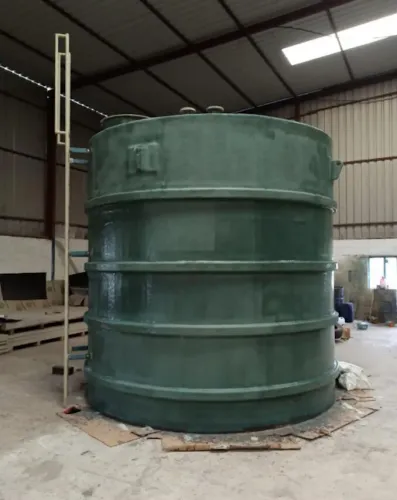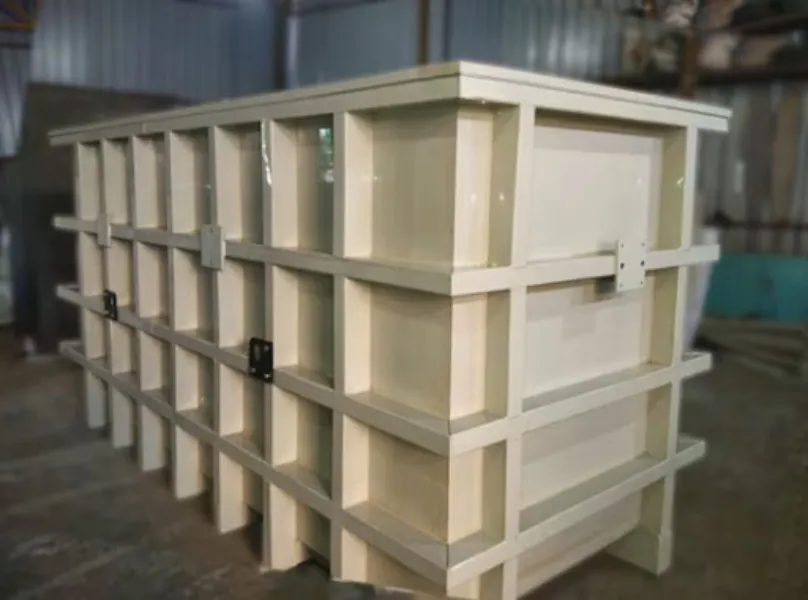
Storage and process tanks used in industrial environments have to withstand much more than the weight of the liquid they contain. Chemical compatibility, temperature, fabrication quality, structural reinforcement, operating conditions, and maintenance requirements all influence tank performance. For many chemical applications, a PP Tank is considered because polypropylene offers useful characteristics for handling a range of corrosive substances.
Electroplating, surface treatment, PCB processing, chemical preparation, and industrial wastewater operations commonly use fabricated thermoplastic tanks.
Understanding Polypropylene Tank Applications
Polypropylene is a thermoplastic material used for fabricating tanks, ducts, scrubbers, and other chemical-handling equipment.
A PP Tank may be designed for applications including:
- Chemical storage
- Electroplating baths
- Pickling processes
- Rinsing
- Effluent treatment
- Chemical mixing
- Surface preparation
- Process water handling
However, polypropylene is not automatically suitable for every chemical or operating condition.
Chemical Compatibility Comes First
The substance stored or processed inside the tank should always be identified before material selection.
Chemical concentration, temperature, duration of exposure, and potential mixtures can influence compatibility. A material that performs effectively with a chemical under one set of conditions may not necessarily provide the same performance at a significantly different temperature or concentration.
Reliable tank specification therefore begins with accurate process data.
Structural Design Is Equally Important
Chemical resistance alone does not determine tank quality.
The tank must withstand hydrostatic pressure and any additional mechanical loads associated with its application. Larger rectangular tanks may require external reinforcement to control deformation.
Engineering considerations can include:
- Tank dimensions
- Liquid density
- Operating level
- Wall thickness
- Reinforcement arrangement
- Nozzle positions
- Supporting structure
- Top accessories
Poorly planned openings and attachments can also create unnecessary stress around the fabricated structure.
Fabrication Quality Affects Service Performance
Thermoplastic tank fabrication requires controlled welding and appropriate workmanship.
Weld quality is particularly important around corners, joints, nozzles, partitions, and reinforcement interfaces. Inspection during fabrication can help identify defects before the tank enters service.
Manufacturers should also provide sufficient access for cleaning and routine inspection where the application requires it.
Process Tanks Need Application Specific Features
A tank used for electroplating may require features that would not be necessary for basic chemical storage.
These could include heating arrangements, cooling coils, circulation connections, filtration lines, electrode supports, covers, extraction hoods, overflow arrangements, and drainage points.
The tank should therefore be treated as part of the process equipment rather than simply as a container.
Selecting Tanks for Industrial Facilities
Bengaluru has a diverse manufacturing base spanning electronics, automotive components, engineering, jewellery, aerospace-related supply chains, and precision manufacturing. Many such operations rely on chemical treatment processes where appropriate tank construction is important.
Associated Surface Innovators manufactures PP and other industrial tanks for customised surface treatment applications in Bengaluru. Equipment specifications can be developed around process chemistry, available space, operating conditions, and integration requirements.
A properly engineered PP Tank begins with understanding what it will contain, how it will operate, and what equipment needs to connect to it. Those details are far more important than choosing a tank based only on external dimensions or nominal capacity.
Keywords