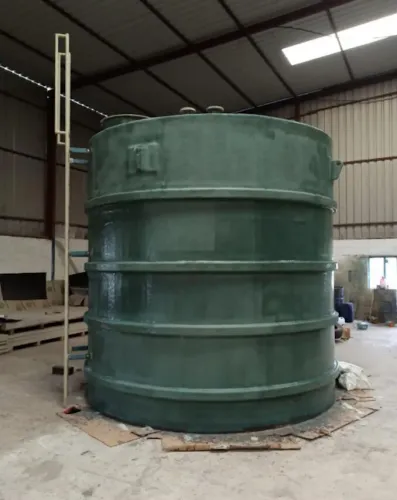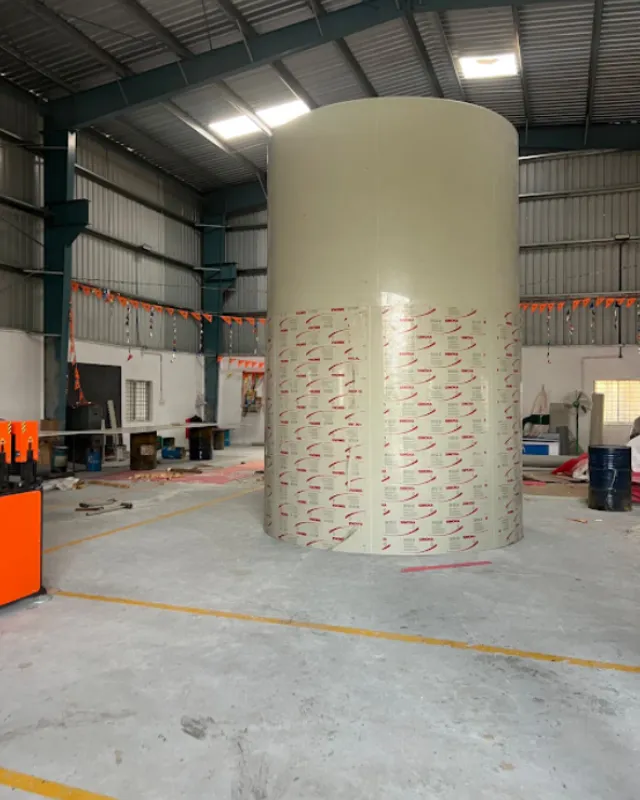
Ordering a PPH Cylindrical Tank for chemical storage or processing requires more information than diameter, height, and capacity. The tank needs to be designed around the liquid, operating temperature, installation environment, connections, and surrounding process equipment.
A structured specification helps industrial buyers receive quotations that are technically comparable and better aligned with actual site requirements.
Provide Complete Chemical Information
Start with the substance the tank will contain.
The equipment manufacturer should receive information about:
- Chemical name
- Concentration
- Specific gravity
- Operating temperature
- Maximum expected temperature
- Storage duration
- Expected process variations
PPH is used for various industrial chemical-handling applications, but compatibility should always be verified against actual operating conditions.
Define Capacity Correctly
State both the required working capacity and any overall capacity considerations.
A tank should not necessarily operate completely to its physical maximum. Appropriate allowance may be needed based on filling, process, and operational requirements.
If future production expansion is expected, discuss it during planning rather than increasing dimensions without evaluating the consequences.
Confirm Installation Dimensions
A cylindrical configuration can be space-efficient for certain storage applications, but the installation location still needs careful checking.
Provide details of the available footprint, height restrictions, access route, surrounding equipment, and foundation.
Where a tank needs to enter an existing factory, doorway and passage dimensions can be just as important as the final installation area.
List Every Required Connection
Create a connection schedule before approving fabrication.
It may include inlet, outlet, overflow, drain, vent, recirculation, level instrumentation, pump suction, and transfer connections.
Specify approximate sizes and preferred orientations where known.
A simple layout drawing can help the manufacturer position connections according to actual site conditions.
Discuss External Equipment
The tank may interact with pumps, chemical dosing systems, transfer pipelines, fume extraction, instrumentation, or process equipment.
Identifying these interfaces early helps prevent conflicts during installation.
Maintenance clearance around valves and pumps should also be considered.
Request a Defined Technical Scope
A useful supplier proposal should clearly describe what is included.
Buyers can review construction material, dimensions, reinforcement, fittings, accessories, testing, support arrangement, installation scope, and documentation.
This makes technical comparison between suppliers more meaningful than comparing only final prices.
Work With a Manufacturer That Understands the Process
Custom tank fabrication benefits from an understanding of the wider production environment.
Associated Surface Innovators in Bengaluru manufactures PPH, PP, PVC, FRP, and stainless-steel equipment alongside electroplating and surface treatment systems. This allows tank requirements to be considered in relation to chemical processing and associated fume-control equipment.
For Karnataka manufacturers preparing to procure a PPH Cylindrical Tank, a detailed specification is the best starting point. Accurate information about chemistry, temperature, capacity, connections, installation space, and operating requirements enables the fabricator to develop equipment around the real application instead of relying on generic assumptions.
Keywords