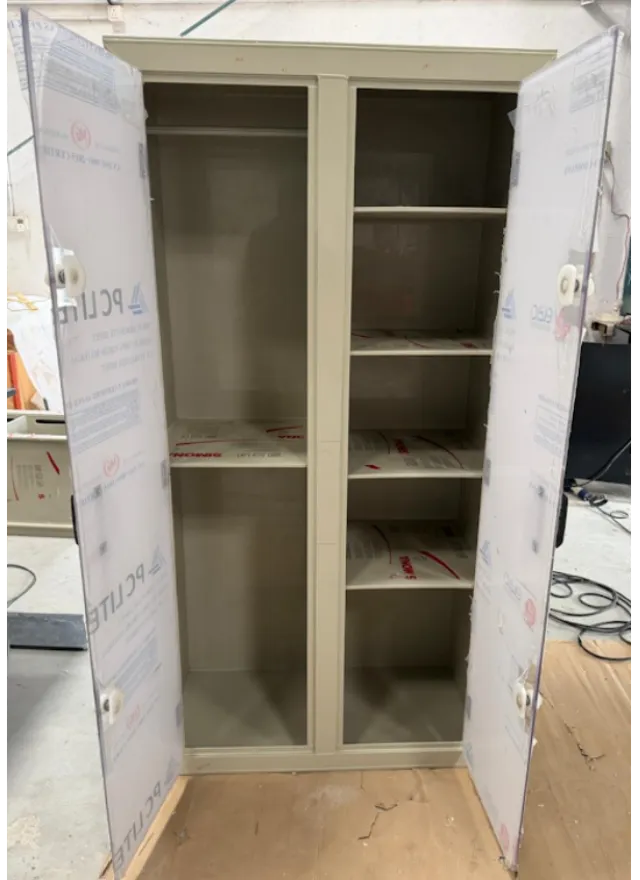
A PPH Cupboard is useful in industrial environments where chemical handling requires a corrosion-resistant enclosed workspace combined with appropriate fume extraction. It may be relevant to chemical laboratories, electroplating operations, PCB manufacturing, surface treatment facilities, jewellery processing, and industrial testing areas.
Before purchasing one, buyers should assess more than external dimensions. Chemical exposure, airflow, ducting, work area, extraction equipment, and construction details all influence suitability.
Identify the Processes Performed Inside
The first step is defining exactly what work will take place inside the cupboard.
List the chemicals, quantities, process temperatures, frequency of use, and equipment that will be placed inside.
This information helps determine the enclosure dimensions, construction material, worktop arrangement, and required extraction capacity.
Evaluate PPH Suitability
PPH is used in corrosive industrial environments because of its chemical-resistance characteristics.
However, the actual chemicals and operating conditions should still be reviewed before the material is specified.
Temperature, concentration, exposure duration, and cleaning chemicals can all influence the selection.
Check the Working Dimensions
External size alone can be misleading.
Operators need enough internal space to perform tasks comfortably while maintaining suitable containment. Equipment placed inside the enclosure should not unnecessarily obstruct airflow.
Consider working height, opening dimensions, internal depth, and required service connections.
Evaluate the Extraction Arrangement
A PPH Cupboard is only effective as a fume-control solution when the extraction system is appropriately designed.
The supplier should consider:
- Required airflow
- Opening area
- Contaminant characteristics
- Duct dimensions
- Duct length
- Pressure losses
- Exhaust blower
- Scrubbing requirements
- Discharge arrangement
If corrosive fumes need treatment, a compatible fume scrubber may also form part of the system.
Consider Utility Connections
Some applications require water, drainage, electrical points, compressed air, gas, or other utilities inside the working enclosure.
These should be identified before fabrication so that suitable connection provisions can be incorporated.
Adding utilities after installation can compromise layout and increase modification work.
Review Maintenance Accessibility
Fans, ducts, pipelines, scrubbers, pumps, and service connections need periodic inspection.
The installation should provide sufficient access for maintenance without requiring major dismantling.
Buyers should also ask how the internal work area and extraction components can be cleaned.
Choose a Supplier Based on System Capability
For a standalone enclosure, fabrication capability is important. For a cupboard connected to a larger chemical processing facility, system-engineering experience becomes even more valuable.
In Bengaluru, where PCB, electronics, automotive, jewellery, engineering, and surface treatment businesses operate across several industrial clusters, custom equipment often needs to fit existing factory layouts.
Associated Surface Innovators manufactures chemical-handling enclosures, tanks, fume extraction equipment, scrubbers, and surface treatment systems for industrial applications.
Before ordering a PPH Cupboard, businesses should prepare information about chemicals, working processes, dimensions, utilities, airflow requirements, and available installation space. A supplier can then develop the enclosure and extraction arrangement around actual operating conditions, giving procurement teams a clearer basis for technical approval.
Keywords