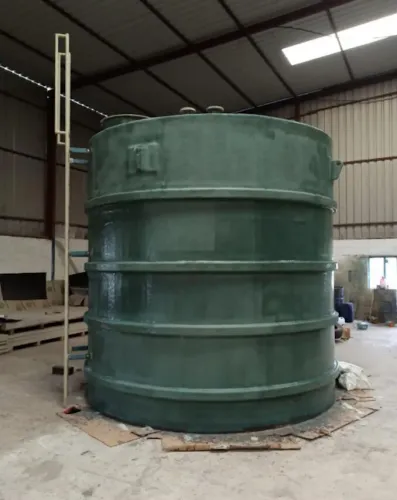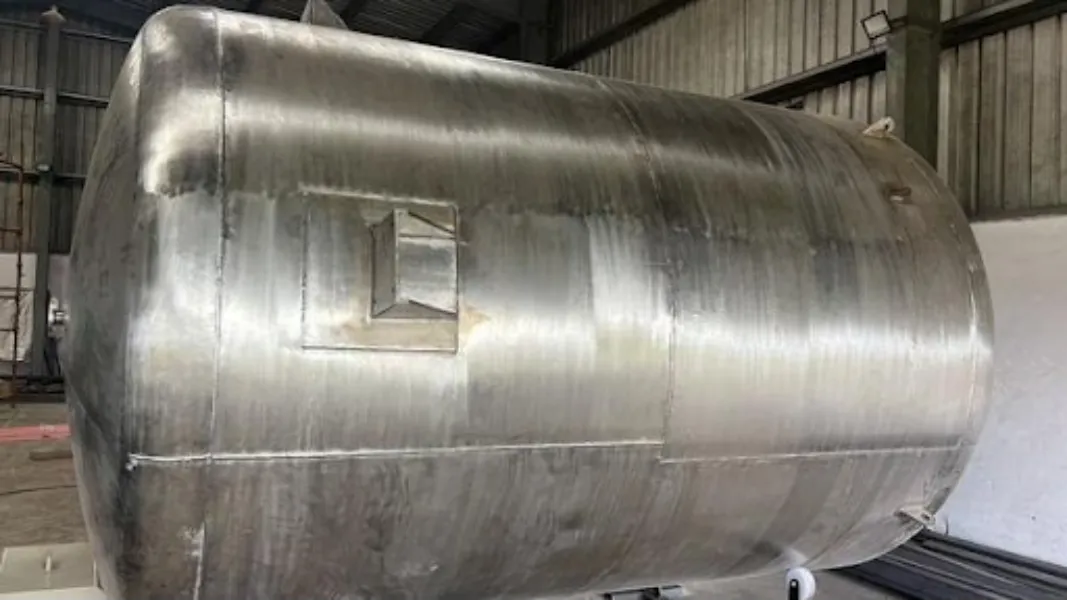
Storing industrial acids requires careful attention to material compatibility, tank construction, process conditions, and installation design. An Acid Storage Tank should be selected according to the specific chemical being stored rather than treated as a standard industrial container.
This is particularly relevant to electroplating facilities, PCB manufacturers, automotive component plants, surface finishing companies, and other Bengaluru industries working with corrosive process chemicals.
Start With the Exact Acid
The phrase acid storage does not provide enough technical information for tank selection.
Different acids behave differently depending on concentration and temperature. A tank material suitable for one application may not automatically suit another.
Before requesting equipment, provide the manufacturer with:
- Exact acid name
- Concentration
- Storage temperature
- Maximum expected temperature
- Required quantity
- Expected storage duration
This information creates the foundation for material evaluation.
Think Beyond Tank Capacity
Capacity remains important, but a reliable industrial tank needs a complete design specification.
Plant teams should also identify tank dimensions, nozzle requirements, filling arrangement, discharge arrangement, inspection access, venting, level indication, structural support, and available installation space.
A tank should fit the plant without blocking operator movement, maintenance access, pipelines, or surrounding equipment.
Venting Needs Attention
Chemical storage can involve vapour and pressure-management considerations depending on the substance and operating conditions.
The tank design should therefore include appropriate venting requirements based on the specific application.
Where fumes need controlled collection, the storage arrangement may also form part of a broader fume-handling system.
Plan for Safe Material Transfer
The way acid enters and leaves the tank is another important consideration.
Pump connections, transfer pipelines, valves, drainage points, and operator access should be coordinated before fabrication.
Poorly positioned connections can make routine production work difficult and may require unnecessary pipeline modifications during installation.
Site Conditions Can Affect Design
An acid storage tank for a new plant can often be planned along with the surrounding equipment.
Retrofit projects are different.
Existing factories may have restricted access, fixed pipelines, limited height, narrow equipment passages, and established production areas.
Accurate site measurements become essential in these situations.
Associated Surface Innovators in Bengaluru manufactures industrial process equipment for chemical-handling and surface finishing applications. Tank requirements can be developed around the process chemistry and available installation conditions.
Questions Procurement Teams Should Answer
Before obtaining a final proposal, establish:
- Which acid will be stored?
- What is its concentration?
- What capacity is required?
- What temperature range is expected?
- Where will the tank be installed?
- How will it be filled?
- How will liquid be transferred out?
- What connections are needed?
- Is fume management required?
- What maintenance access is available?
A detailed Acid Storage Tank specification helps manufacturers evaluate material, fabrication, reinforcement, fittings, and system integration more accurately.
For industrial plants in Bengaluru and Karnataka, treating acid storage as an engineering requirement rather than a basic tank purchase can improve equipment suitability and simplify installation, operation, and long-term maintenance.
Keywords