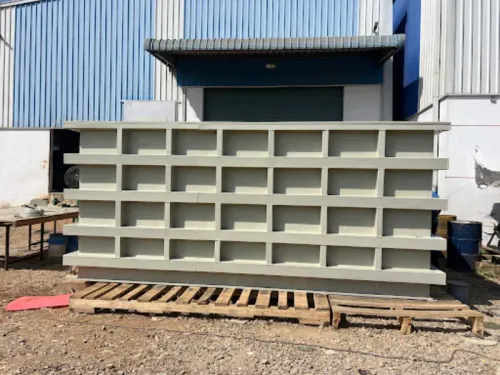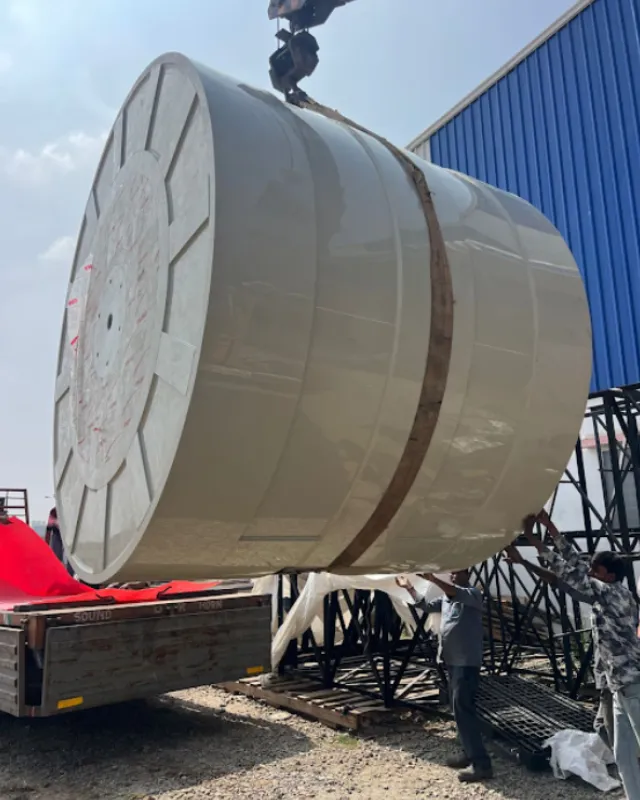
Leather processing involves repeated chemical and mechanical operations that require equipment designed around batch capacity, chemical exposure, loading, rotation, and production workflow. A PPH Tannery Drum can be considered for suitable processing applications where a polypropylene homopolymer provides the required chemical-resistant properties.
Industrial buyers need to evaluate more than the overall dimensions of the drum before placing an order.
Production Capacity Comes First
The required drum capacity should match the actual batch size and operating pattern.
Plants should determine:
- Material load per batch
- Processing volume
- Number of batches per shift
- Expected production growth
- Working cycle
- Loading method
Selecting equipment without considering these factors can restrict production efficiency.
Chemical Conditions Affect Equipment Selection
Leather processing involves different chemicals at different stages.
The equipment construction should therefore be evaluated according to chemical composition, concentration, process temperature, and exposure duration.
Providing complete process information allows the manufacturer to evaluate PPH suitability more accurately.
Mechanical Requirements Need Attention
A tannery drum is rotating equipment.
Chemical compatibility is only one aspect of its design.
Structural support, drum construction, drive arrangement, loading, rotational operation, and long-term mechanical performance also need consideration.
Engineers should discuss the expected operating load rather than focusing only on empty drum dimensions.
Plant Layout Can Influence Drum Size
Industrial equipment needs sufficient space for operation and maintenance.
Before finalising the drum, measure:
- Available floor space
- Equipment entry route
- Loading area
- Unloading area
- Operator movement
- Utility access
- Maintenance clearance
- Distance from surrounding machinery
Accurate layout planning becomes particularly important for existing production facilities.
Bengaluru Manufacturing Support
Associated Surface Innovators manufactures industrial process equipment in Bengaluru for chemical-processing and surface treatment applications.
For companies in Karnataka sourcing specialised processing equipment, detailed technical discussions during the enquiry stage can help align equipment dimensions and features with the actual plant requirement.
Maintenance Access Should Be Planned
Rotating industrial equipment requires routine inspection and maintenance.
The installation area should provide access to the drive system, supports, working components, and other service points.
Placing equipment in a tightly restricted area can increase maintenance effort later.
Prepare a Complete Equipment Enquiry
When requesting a PPH Tannery Drum, include:
- Processing application
- Batch capacity
- Material load
- Chemicals used
- Operating temperature
- Required drum dimensions
- Production cycles
- Available plant space
- Utility requirements
- Installation restrictions
A detailed equipment specification helps manufacturers understand how the drum will actually operate.
A PPH Tannery Drum should be evaluated as complete process equipment rather than as a simple fabricated vessel.
Chemical compatibility, batch requirements, mechanical design, drive arrangement, plant layout, accessibility, and maintenance all influence equipment performance. Industrial buyers who define these requirements clearly are better positioned to select equipment that fits both current production and future operational needs.
Keywords