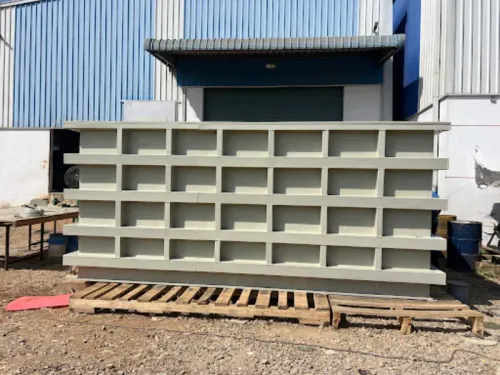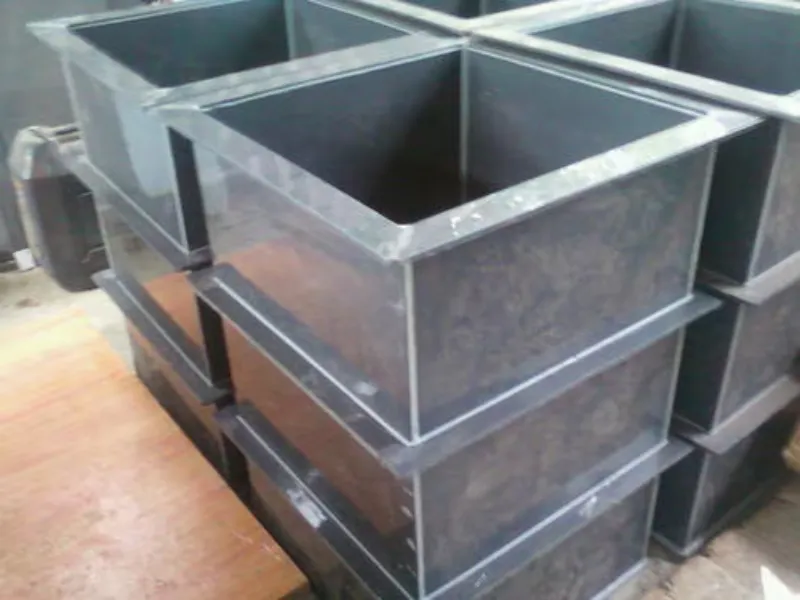
When industrial operations involve corrosive liquids, tank material becomes a critical procurement decision. A PVC Tank may be considered for selected chemical storage and processing duties because PVC offers useful chemical resistance in many industrial environments.
However, material selection should always be based on the actual process rather than assuming that every plastic tank behaves in the same way.
Assess Chemical Compatibility First
Before choosing PVC, identify the exact substance the tank will handle.
Important information includes:
- Chemical name
- Concentration
- Operating temperature
- Specific gravity
- Storage duration
- Process fluctuations
- Potential chemical mixtures
These details help determine whether PVC is appropriate for the intended application.
Understand the Operating Temperature
Temperature is particularly important when selecting thermoplastic process equipment.
A tank may be chemically compatible at one temperature while higher operating temperatures can affect material performance. Plants using heated chemical baths should therefore provide realistic operating temperatures rather than only normal room-temperature conditions.
This allows the fabricator to recommend an appropriate material and construction method.
Review Tank Geometry
Capacity alone does not define a tank.
A tall narrow tank and a shallow wide tank of equal volume create different structural and installation requirements. The shape may also be influenced by components, product dimensions, immersion processes, factory space, and operator access.
For surface treatment applications, internal dimensions may be determined by the parts being processed rather than simply by liquid capacity.
Check Connections Before Fabrication
Nozzles and pipeline connections should be identified during the design stage.
Consider inlet, outlet, overflow, drain, circulation, filtration, level monitoring, and any additional process connections. The orientation of these fittings should match the actual plant layout.
Early coordination reduces the need for modifications during installation.
Compare PVC With Other Materials Carefully
PP, PPH, FRP, HDPE, PVC, and stainless steel each have different characteristics.
Rather than asking which tank material is universally best, manufacturers should ask which material best suits the specific chemical, temperature, structural load, fabrication requirement, and service environment.
This application-based comparison is more useful than choosing a material purely from past experience with a different process.
Look Beyond Initial Procurement Cost
Tank replacement can affect production schedules, chemical handling, labour, and maintenance. Consequently, procurement teams should consider expected service conditions and maintainability alongside initial price.
Fabrication quality, reinforcement, access, fittings, testing, and supplier capability all influence the value of the finished equipment.
Match the Tank to the Production Environment
Manufacturing businesses in Bengaluru and throughout Karnataka frequently operate compact production facilities where tanks must fit around existing machinery and utilities.
Associated Surface Innovators manufactures customised thermoplastic tanks alongside electroplating and surface treatment systems. This type of integrated approach can be useful where a PVC Tank needs to connect with pumps, filters, fume extraction equipment, pipelines, or other process components.
Choosing a PVC Tank should therefore begin with process information, not tank dimensions alone. When chemical compatibility, temperature, structural requirements, connections, and installation conditions are evaluated together, procurement teams can make a more informed equipment decision.
Keywords